.svg)
Patients Find Their Way.
Staff Get Their Time Back.
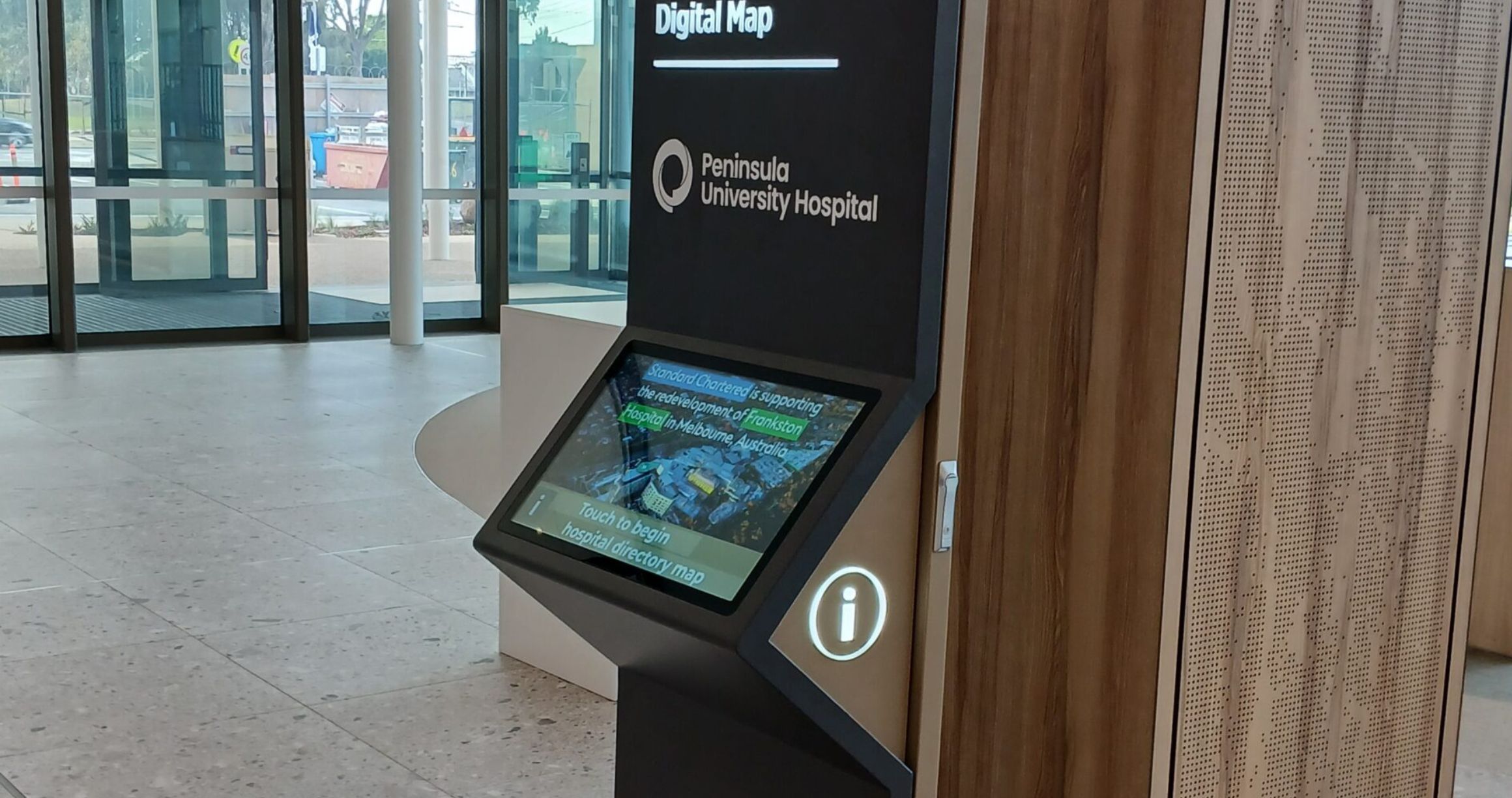
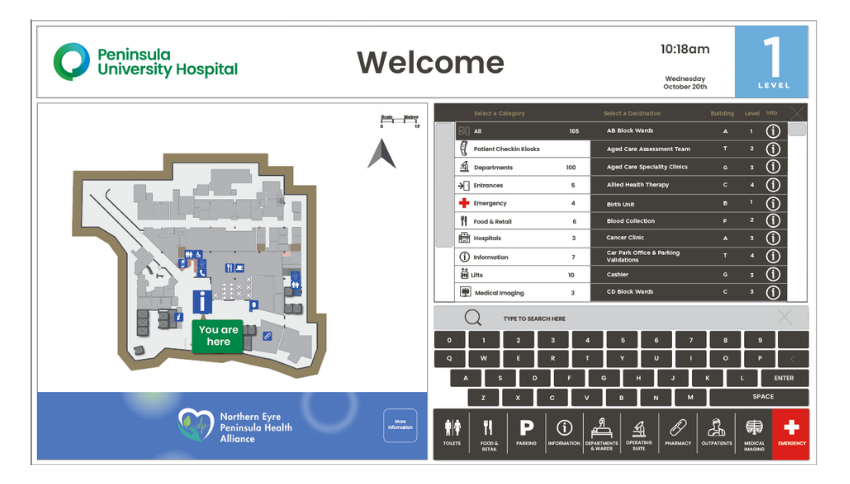
From kiosk to mobile, no app download needed. Patients and visitors find their way without asking for help. Envent wayfinding works across single buildings and multi-campus hospital networks. 21 years building it for Australian healthcare.
A lost patient.
A Late appointment.
Hospitals are some of the hardest buildings in the country to navigate. Multiple towers, shifting departments, entrances that don't match the address on the letter. Every person who can't find their way turns into a missed slot, a stressed visitor, and another interruption for staff.
Patients arrive late or miss appointments
Confusing campuses mean people show up flustered, in the wrong building, or not at all. Clinics run behind.
Staff become a directions service
Nurses, reception, and security spend hours every week pointing people to radiology. That's time taken from care.
Accessibility gets left behind
Static signs fail people with low vision, low mobility, or limited English. Compliance becomes a problem, not a given.
Multi-site networks fragment
Each campus ends up with its own signage logic. No single source of truth, no easy way to update across sites.
One Journey.
Kiosk to mobile, No app.
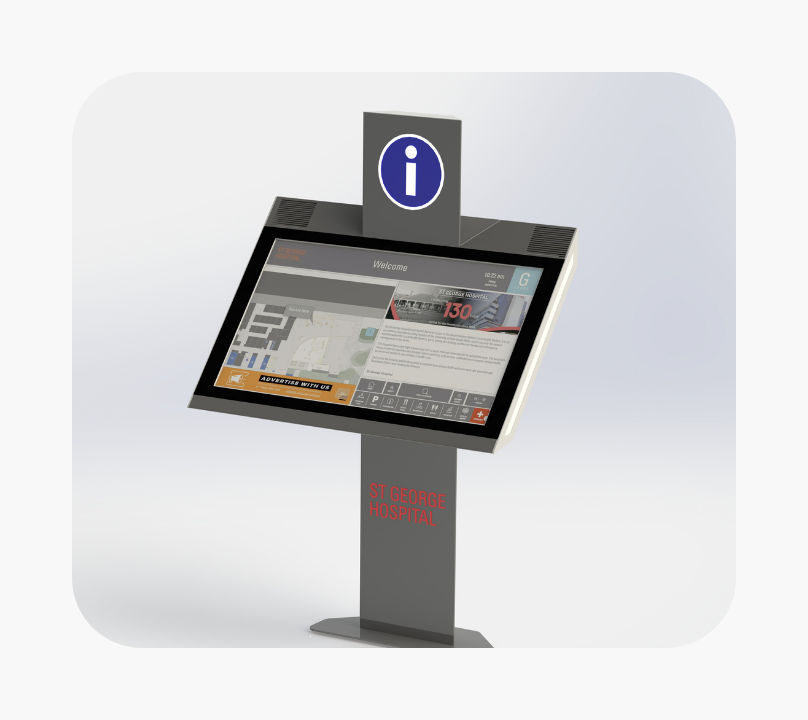
Find the kiosk
Purpose-built wayfinding kiosks at every entrance and decision point. Easy to read, easy to use, built for Australian healthcare.
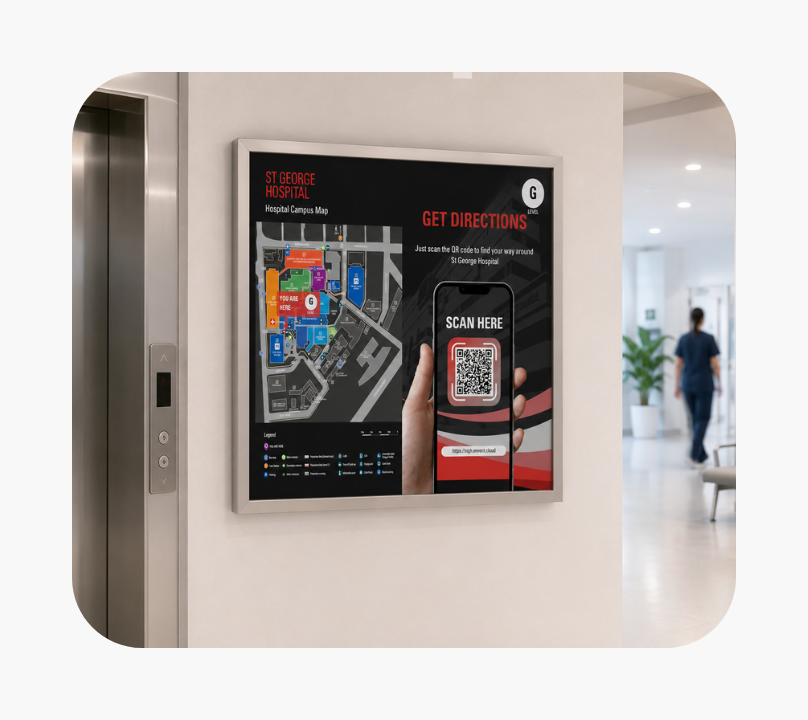
Scan to continue
Scan the code and the route goes to the patient's phone. No app to install, no friction. It works through the browser on the device already in their hand.
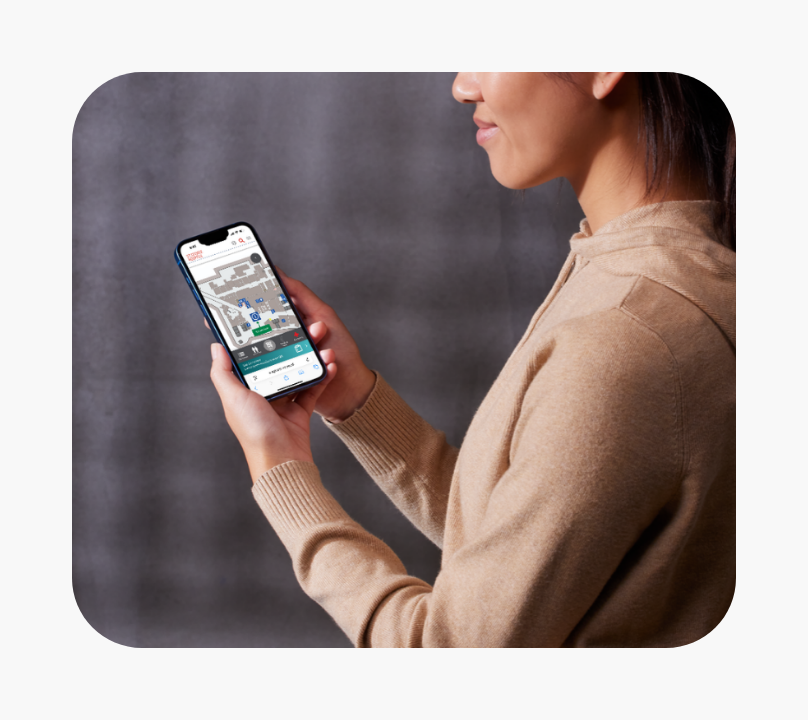
Walk it on mobile
The phone guides them the whole way, lobby to clinic door, turn by turn. The journey that started at the kiosk travels with them until they arrive.
What Good Wayfinding Actually Does.


Why hospitals choose Envent wayfinding.

21 years, built for what's next
Two decades designing and deploying wayfinding in Australian public spaces. And our director's PhD research on trust in AI shapes where we take it next, carefully.

Maps that hold up
Accurate indoor and outdoor maps across every building and campus in the network. When a department moves, you update once and it's live everywhere.

Kiosks build to last
Award-calibre industrial design, our own, not a rebadged enclosure. Built for the wear of a public hospital and Australian conditions.

WCAG ready by design
Built to accessibility standards from the start, not patched before an audit. Works for people with a range of vision, mobility, and language needs.

One CMS, every site
Kiosk, mobile, and content managed from a single login via Envent Cloud. No vendor call for routine changes, no fragmentation across campuses.

Australian team, local support
Local company, local people answering the phone. No offshore support queue, no overseas vendor on a different clock. We're here, where your sites are.
What Hospital Teams Ask Us.
Does it work across a multi-building campus?
Yes. Envent wayfinding is built for single buildings and multi-campus hospital networks alike. Every site runs from one platform, so a map change or a department move is updated once and goes live across every kiosk and every mobile route.
Do patients need to download an app?
No. Patients scan the kiosk and the route continues on their phone through the browser. No app, no account, no install. That removes the single biggest reason hospital wayfinding apps fail to get used.
Is it accessible and compliant?
Envent builds to WCAG accessibility standards as a starting point, not a patch. The kiosk hardware and the mobile experience are both designed for people with a range of vision, mobility, and language needs.
Who updates the maps when something changes?
Your team does, from a single login through Envent Cloud. No vendor call required for routine changes. When a clinic relocates, you update the map once and every screen and mobile route reflects it. Option to request us to update it too.
How long has Envent been doing this?
21 years designing and deploying digital wayfinding in Australia. We're an Australian company with an Australian team and local support. The kiosk hardware is our own design, not a rebadged enclosure.
See it working in your hospital
Book a demo and we'll walk through wayfinding build your your campus.