.svg)
SENTINEL: How a Government Grant Became a Global Technology Play
Envent won a COVID TechVoucher grant in 2022. It started something much bigger than a pandemic tool.
.png)
Key takeaways
- SENTINEL is Envent's patented AI-driven health and safety monitoring system — not a security camera, not a sign, an active intelligent system that guides people toward safe behaviour in real time.
- Developed through a 2022 NSW Government COVID-19 TechVoucher Grant, in research partnership with the University of Newcastle's FASTLAB commercialisation division.
- Capabilities: hand sanitisation monitoring, facial recognition, temperature checking, people counting, escalator safety, mental health support for vulnerable populations, and integrated wayfinding.
- Operates on a trust-based framework — identify, check, sanitise — designed to influence behaviour through social conscience, not enforcement.
- Interest is now arriving from international health infrastructure operators. The addressable market is no longer confined to Australia.
In April 2022, Envent won a NSW Government COVID-19 TechVoucher Grant. The program existed to help Australian technology companies accelerate product development in partnership with research institutions. Envent qualified. The product was SENTINEL.
That grant was the starting gun. SENTINEL is an AI health and safety monitoring system designed for hospitals, shopping centres, and high-traffic public spaces.
What does SENTINEL do.
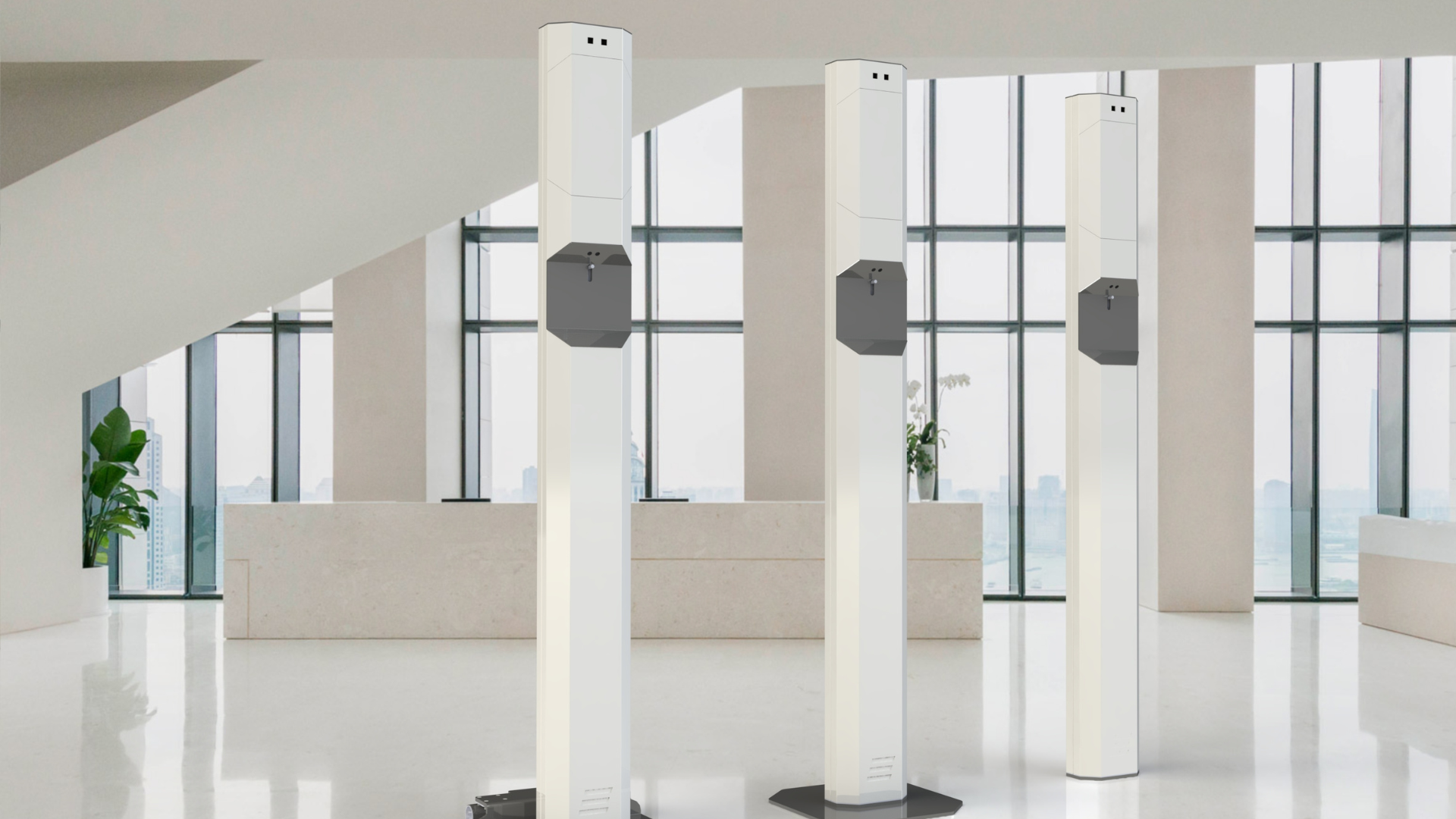
SENTINEL is Envent's patented AI-driven health and safety ambassador. It is not a security camera. It is not a sign. It is an active, intelligent system that guides people toward safe behaviour in real time.
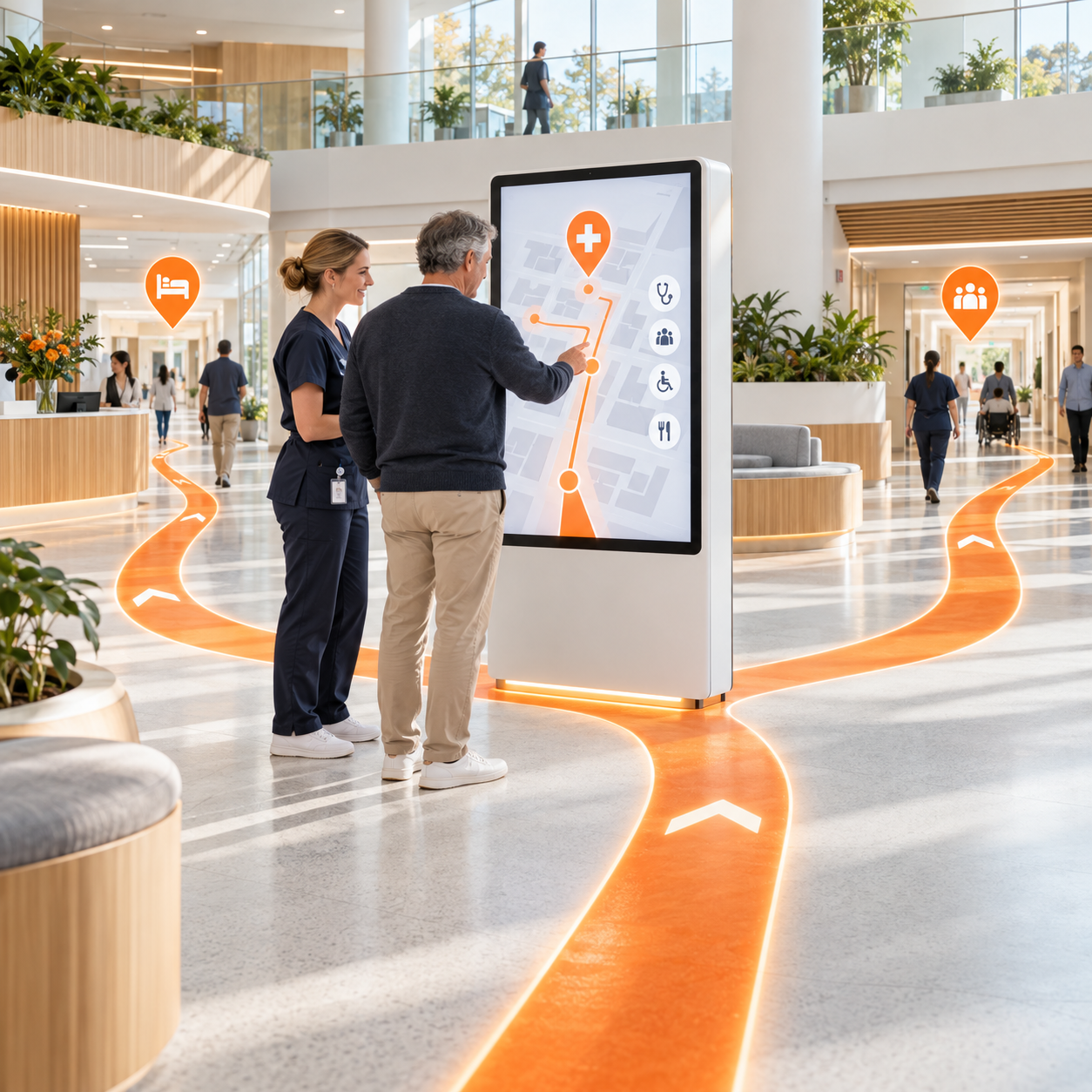
The capability set is wide. SENTINEL handles hand sanitisation monitoring, facial recognition, temperature checking, people counting, escalator safety, and mental health support for vulnerable populations. It also integrates wayfinding, connecting spatial navigation with behavioural guidance in a single system.
The operating principle is trust, not enforcement. The framework: identify, check, and sanitise. A friendly, consistent reminder that works through social conscience. People respond to a system they trust. That is what SENTINEL is designed to be.
How was SENTINEL developed and validated?
The grant was won in collaboration with the University of Newcastle through their FASTLAB commercialisation division. FASTLAB brought structured research capacity to the project. The university team handled literature review, ethics review, user engagement design, architecture workshops, prototype development, and formal validation.
That collaboration did not end with the grant.
Justin Dean, Envent's director, is still working with the academic team at Newcastle. His PhD research focuses on AI trust and human-centred design, and it feeds directly into how SENTINEL continues to evolve. The same question drives both the research and the product: how do you design an AI system that people actually accept?
That question is not rhetorical. It determines whether the technology works in the real world or just in a lab.
Where is SENTINEL being deployed?
Development has continued well past the original grant scope. The technology has matured. And interest is arriving from outside Australia.
Overseas clients are approaching Envent about SENTINEL. The combination of patented AI capability, active university research, and wayfinding expertise is rare. For health infrastructure operators internationally, that combination is worth a serious conversation.
The COVID grant funded one phase. The commercial phase is what follows, and the addressable market is no longer confined to Australia.
What makes SENTINEL different from other AI safety systems?
SENTINEL started as a response to a pandemic. The core design principles, trust-based interaction, transparent AI behaviour, human-centred guidance, are the same principles Envent applies across wayfinding, AI avatars, and public-facing technology more broadly.
The grant did not create a one-off product. It gave Envent the research foundation to build technology that holds up when tested, by real users, in real environments, under academic scrutiny. That is a different thing from most AI products in the market.
It is also why the interest is international. SENTINEL represents what happens when AI health monitoring is built on research, not assumption — tested by real users, in real environments, under academic scrutiny.
Frequently asked questions
What is SENTINEL?
SENTINEL is Envent's patented AI health and safety monitoring system. It uses computer vision and behavioural guidance technology to monitor hand sanitisation, temperature, people counting, escalator safety, and mental health indicators in real time. Unlike passive CCTV, SENTINEL actively guides people toward safe behaviour — operating on a trust-based framework of identify, check, and sanitise.
How was SENTINEL developed?
Envent won a NSW Government COVID-19 TechVoucher Grant in April 2022 and developed SENTINEL in research partnership with the University of Newcastle's FASTLAB commercialisation division. The university team managed literature review, ethics review, user engagement design, prototype development, and formal validation. Development has continued well beyond the original grant scope.
What environments is SENTINEL designed for?
SENTINEL is designed for hospitals, health facilities, shopping centres, and any high-traffic public environment where health monitoring and safety guidance are required. It integrates with Envent's wayfinding platform, connecting spatial navigation with behavioural guidance in a single system.
Is SENTINEL available outside Australia?
Yes. Interest from international health infrastructure operators is active. The combination of patented AI capability, academic research validation, and wayfinding integration is rare globally, and Envent is in commercial conversations outside Australia.