.svg)
Smart Sensors and Aged Care: Why Technology Must Be an Election Priority
70% of older Australians want smart sensors at home. Why this should lead every policy debate.
.png)

Australia's healthcare system is under pressure it was not designed to handle.
The population is ageing faster than infrastructure is expanding. Hospitals are strained. Aged care institutions are at capacity. And the people who need support most, older Australians who want to remain healthy and independent at home, are being absorbed into systems built for acute care rather than long-term wellbeing.
The NSW Smart Sensing Network's 3rd Ageing Forum brought together researchers, clinicians, technologists, and policymakers to look at a different path forward. The conversation was direct: smart sensor technology, deployed well, could keep older Australians at home longer, reduce the burden on hospitals and care facilities, and deliver better outcomes at lower cost. The question is not whether the technology exists. It does. The question is whether governments are prepared to prioritise it.
What the Research Shows
The forum's findings are hard to dismiss. Seventy percent of older Australians say they are open to adopting smart sensors to support independent living. That is not a niche position. It is a clear signal that the public is ahead of the policy.
What smart sensors can do in a home environment is substantial. Movement monitoring that detects changes in daily patterns and flags early signs of decline. Fall detection that triggers a response before a situation becomes critical. Medication tracking. Sleep monitoring. Environmental controls that adapt to the needs of someone living with mobility or cognitive challenges. None of this requires a hospital. All of it can keep people safer, for longer, in their own homes.
As Professor Paul Egglestone from FASTLAB put it:
"We need to advocate for where technology and humanity work hand in hand to keep our parents and grandparents healthy at home."
NSW Health Minister Ryan Park went further:
"Technology isn't just a tool. It's a lifeline for an ageing population and a foundation for a more resilient healthcare system."
The Connection to Wayfinding and Spatial Intelligence
This is where Envent's work connects to a conversation that might otherwise seem separate.
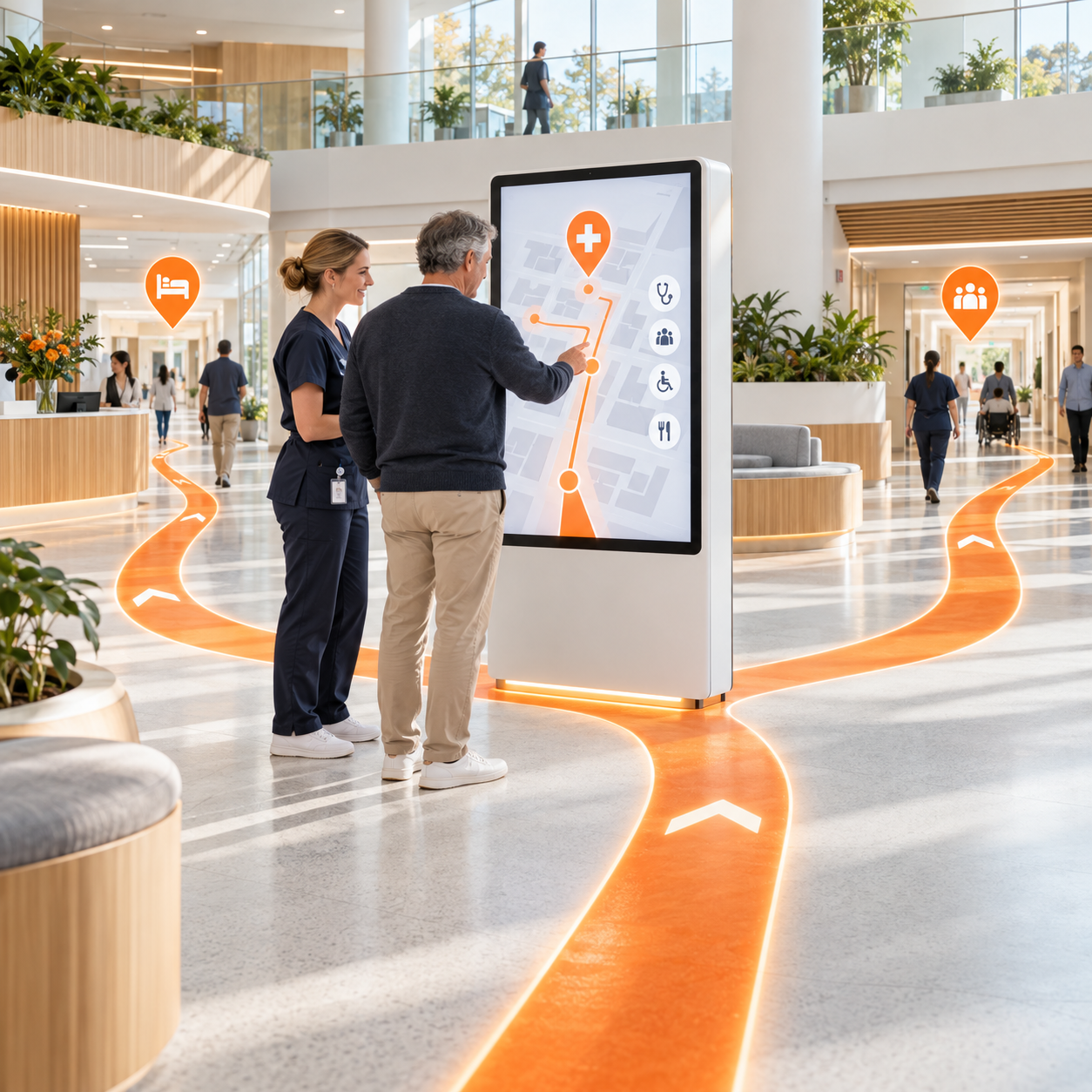
Digital wayfinding is, at its core, about understanding how people move through and interact with physical environments. The same spatial intelligence that makes a hospital wayfinding kiosk effective, knowing where someone is, understanding their context, and giving them exactly the information they need at that moment, is what makes smart sensor systems for aged care work.
The technology stack is different. The design principle is identical. Build systems that understand human behaviour in physical space and use that understanding to reduce friction, increase safety, and give people more control over their environment.
Dr George Margelis, speaking at the forum, described smart sensors and AI as the foundation of a new aged-care ecosystem that combines efficiency with quality care. That framing matches what Envent has been building toward in wayfinding since 2004. Environments that respond to people. Systems that know context. Design that puts the human experience first.
What Needs to Happen
The technology is ready. The public appetite is there. The healthcare imperative is clear. What is missing is policy prioritisation.
Cloud-based platforms, AI-powered analysis, and integrated sensor networks are no longer experimental. They are deployable now, at scale, in Australian homes and care environments. The barrier is investment and intent, not capability.
For an ageing population that increasingly expects digital systems to work for them rather than against them, smart sensing technology in aged care is not a future investment. It is an overdue one.
The NSSN forum made that case with evidence. What comes next depends on whether governments treat technology-supported aged care as the healthcare strategy it is, not as a line item to be considered after the more visible hospital funding debates.
Read the full story to learn how technology could redefine aged care in Australia: https://lnkd.in/gnPiFB_B