.svg)
The Way
Justin on 30 years of wayfinding practice, and why the real work is never finished.
.png)
.png)
In Japanese, the suffix -do(道 Pronounced "dou") means "the way."
Judo. 柔道
Aikido. 合気道
Kendo. 剣道
Each one is not just a set of techniques. It is a path of practice, refinement, and commitment. You don't master judo and stop. You keep going.
Wayfinding works the same way.
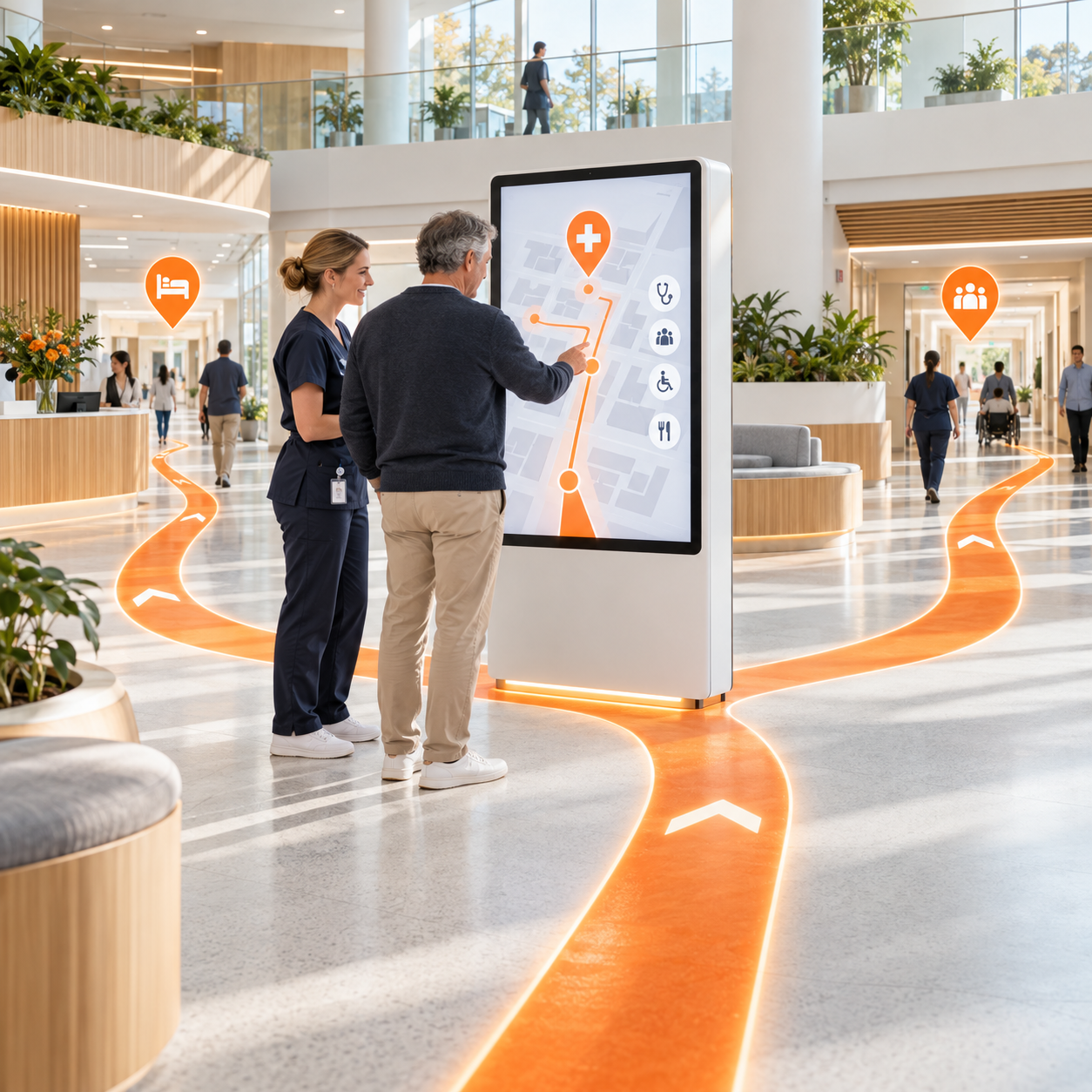
I started working with wayfinding in the early 1990s. Back then, digital wayfinding meant a static screen with a directory list and a blinking cursor. What we do now, interactive kiosk maps, mobile navigation, cloud-managed content across entire hospital campuses, that is a different world. But the core question has not changed.
Can this person find where they need to go?
That's it. That is the whole job.
It sounds simple. It is not.
Every building is different. Every user population is different.
A hospital has patients who are scared, in pain, running late. A shopping centre has people pushing prams, dragging luggage, checking their phones. A council building has residents who have never been there before and don't plan to come back. None of them want to think about the wayfinding system. They just want it to work.
Getting to that level of invisibility, where the system is so good that nobody notices it, takes everything. Industrial design that fits the environment. Software that is fast and accurate. Maps that actually reflect how people think about space, not just how architects drew it. Accessibility built in from day one, not bolted on later.
Thirty years in, I am still working on it.
That's the point of a do(道).
There is no finish line. There is just the practice, and the commitment to keep getting better.
Envent's job is to find the way. Show the way. And for the people we build for, make the way obvious.
That has been the idea since the start. It still is.